
Maritime Migration Routes
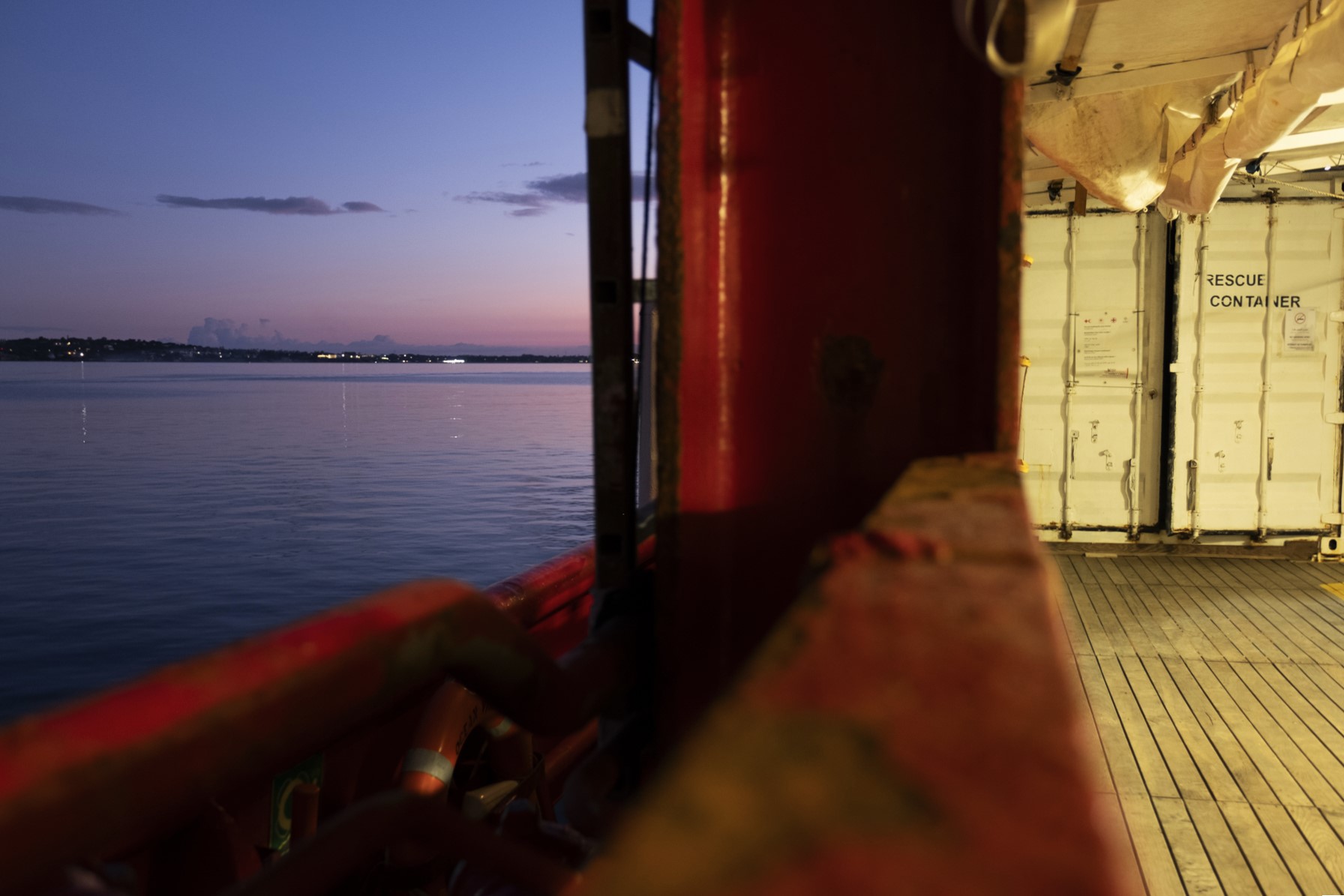
Mediterranean Routes
The Mediterranean Sea remains the most used and best understood maritime migration route in the world, with 142,324 people arriving in Europe in 2024. The Mediterranean routes are complex, with most migrants and refugees making long journeys overland before reaching coastal countries of departure. Some migrants and refugees, moreover, may make more than one maritime crossing, such as moving by sea across the Mediterranean, by land through Continental Europe, and then the English Channel. They may also face several failed attempts before reaching a place of safety.
There are three Mediterranean routes (below figures courtesy of IOM):
- The Central Mediterranean route, primarily between Libya and Tunisia in North Africa and Italy and Malta in Europe, is often the most heavily utilized, with 66,855 people travelling in 2024.
- The Eastern Mediterranean route, which often sees migrants leaving Turkey for Greece, Bulgaria or Italy or refugees departing from Lebanon or Syria for Europe, increased as a share of Mediterranean movements, with 60,989 people moving in 2024.
- The Western Mediterranean route, with migrants and refugees departing Morocco or Algeria for Spain, with 14,480 people moving in 2024.
The English Channel is another maritime route between European countries, in this case France, Belgium and the United Kingdom. Despite being an intra-European route, the English Channel has seen an increase in movements since 2023, with 36,816 migrants and refugees making the crossing in 2024.
The ocean/sea crossings are dangerous in the extreme. Refugees and migrants travel in small watercraft, often inflatable boats, iron boats or traditional pirogues. The Central Mediterranean Sea route can be a journey of more than 400 km depending on point of departure while the Western African Atlantic route can stretch more than 1,000 km from Senegal to the Canary Islands, involving many days or even weeks at sea. Some boats have drifted as far as the Caribbean.
The situation on land, however, is often just as harrowing. The United Nations has documented serious abuse and torture of migrants and refugees in Libya and organizations such as Human Rights Watch have
identified systematic discrimination against migrants and refugees in Tunisia. Turkey, Algeria and Morocco, while generally safer than Libya, have been criticized by some organizations for not offering sufficient protections for refugees.
Northwest African Maritime Route
The Northwest African Maritime Route, from various parts of the West and Northwest African coastline to the Canary Islands, a part of Spain, has become a major route for maritime migrants and refugees. Boats may leave from nearby beaches in Morocco or Mauritania, but may also travel from as far as Senegal, the Gambia, Guinea and Guinea-Bissau. These journeys take place in the open Atlantic, covering a distance of 2,000km, and can last ten days or more, with frequent storms and rough currents.
In 2024, 46,843 irregular maritime arrivals reached the Canary Islands, but there are likely many more who attempt the journey. The Spanish NGO Caminando Fronteras estimates that 9,757 people died while trying to reach the Canary Islands and IOM set the minimum number of deaths at 1,062.
Gulf of Aden
The Gulf of Aden is a major artery for commercial shipping and for maritime movement. Recent threats of attacks on commercial shipping have resulted in a significant drop in large ships moving through the Gulf, though more than a hundred of commercial ships continue to transit each month. A strategic chokepoint that connects the Indian and Pacific Oceans to the Red Sea and Suez Canal, the Gulf of Aden also separates the Horn of Africa from the Arabian Peninsula. Yemen lies directly across from the African coast and for many years migrants and refugees have made a perilous sea and land journey to try to reach Yemen and Saudi Arabia through Yemen.
Unlike most other waterways, moreover, the Gulf of Aden sees migration in both directions. As the conflict in Yemen has intensified and Saudi Arabia has tightened its border, every year thousands of migrants, refugees—and to a lesser degree, returnees—have left Yemen to reach the Horn of Africa. Lack of governance in the region is a particular problem. Piracy and terrorist attacks have taken place in the Gulf of Aden, which serves to deter commercial shipping from engaging in rescue. Smuggling groups on both sides of the Gulf of Aden are notoriously ruthless, with reported cases of torture during the land journey and smuggling crews pushing migrants and refugees into the water if they are sighted by coast guard vessels. Moreover, Yemen, Djibouti, Somalia and Eritrea do not have a rescue coordination centre (RCC) registered with the IMO. The closest RCCs operate from Jeddah and Damam, Saudi Arabia.
Based on IOM’s Displacement Tracking Matrix and Missing Migrants Project, approximately 54,533 people arrived in Yemen from the Horn in 2024, and an estimated 13,5500 people were tracked crossing the Gulf of Aden back to Djibouti in 2023. These numbers are reduced from 2023, in large part due to increased patrols by Yemen, Saudi Arabia, and Djibouti. These patrols, however, have pushed people to use longer and more dangerous routes between Somalia and Yemen, rather than the narrower parts of the Gulf of Aden. While estimating maritime casualties along this route is notoriously difficult, the estimated 400 deaths in 2024 mark this as the deadliest year on record.
Western Indian Ocean
The Western Indian Ocean route, from East Africa, Madagascar, and the Comoros Islands to Mayotte, part of France, is an important route for maritime migrants and refugees. This includes people departing from the Great Lakes region of Africa (Democratic Republic of the Congo, Burundi) via Tanzania and the Comoros, and Malagasy coming from Madagascar; there is also a long history of Comorians coming to Mayotte.
This remains a poorly understood route for which FHAS and other actors continue to try to gather better data. Numbers of people travelling are difficult to estimate, but authorities deported 22,000 people to the Comoros in 2023 and arrested 7,839 people at sea in 2022. These numbers suggest that annual maritime arrivals are well into the thousands, with an uncertain number of deaths.
Bay of Bengal and Andaman Sea
The Bay of Bengal and Andaman Sea continue to be a key route for Rohingya refugees seeking to reach Southeast Asia. Rohingya refugees have been a marginalized community in Myanmar for generations and are currently the world’s largest stateless population, with nearly one million displaced in neighbouring Bangladesh. Maritime movements from Myanmar and Bangladesh to Indonesia, Malaysia and Thailand began in 2012, peaking in 2015.
The year 2024 saw a sharp rise in these movements, with approximately 9,200 people departing by boat, more than double the 4,500 people in 2023. This surge makes 2024 one of the busiest – and deadliest – years since the 2015. At least 15 separate boat accidents were recorded in 2024, with roughly 657 people reported dead or missing at sea. In other words, about one life was lost for every 14 people who attempted the journey. Women and children represented 72% of passengers, the highest proportion on record.
Caribbean Routes
The ocean route between Caribbean and Latin American countries and the United States is another busy migration sea lane. Deterioration of the Cuban economy and dire political turmoil in Haiti has driven a sharp increase in Caribbean maritime movements in recent years. These movements are often informal and may involve landfall at different islands along the way. In this way, the numbers of migrants and refugees moving in the Caribbean is more difficult to assess than for the Mediterranean. At least 5,967 people attempted irregular maritime journeys in 2024. The US Coast Guard states that in fiscal year 2024 (October 2023-September 2024), a total of 1,607 people were intercepted in the Florida straits. An additional 1,199 people were intercepted in the Mona Passage, a dangerous crossing between the Dominican Republic and Puerto Rico. Authorities in the Bahamas and Turks and Caicos intercepted an additional 3,161 individuals were interdicted at sea by the US or its regional partners.