
Western Indian Ocean Dialogue 2025
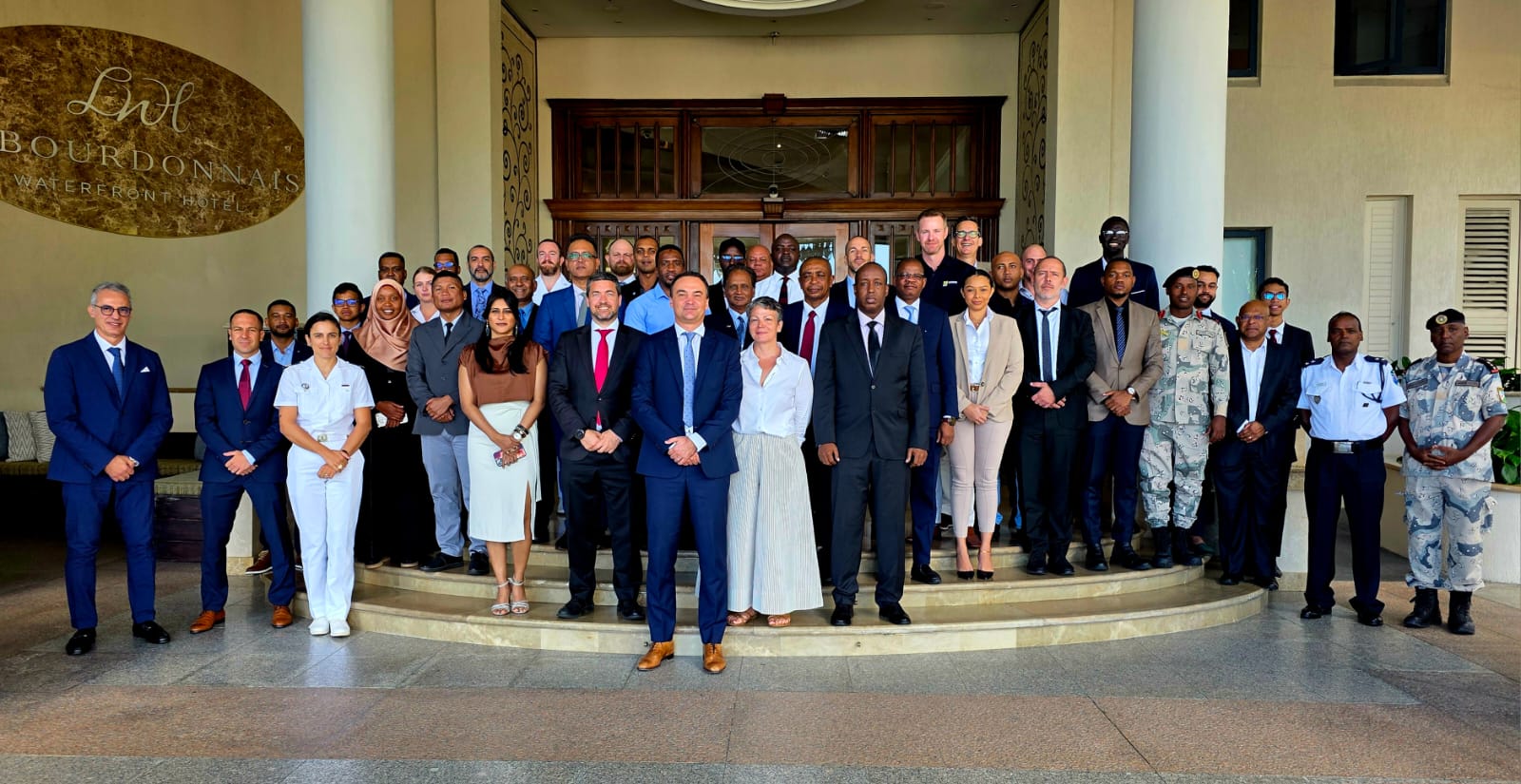
This inaugural regional workshop marked FHAS's first effort to bring Western Indian Ocean maritime stakeholders together for structured dialogue on safety at sea. Taking place over two days in June 2025 in Port Louis and co-hosted by the Indian Ocean Commission, the gathering assembled more than fifty participantsfrom coast guards and state representatives across eleven countries; shipping companies and the maritime sector; the International Federation of the Red Cross and Red Crescent Societies and member National Societies from the region. The format prioritized candid information-sharing in a confidential setting, allowing national maritime authorities to present their operational realities alongside industry and civil society perspectives for the first time in this region.
Collaborative working groups examined data systems, training frameworks, and emergency response assets. A recurring theme across all discussions was the fragmentation of maritime domain awareness: despite existing regional information centres, access to vessel tracking tools remained uneven, and community-level movement data went largely untapped. Working groups also explored the intersection of SAR operations with migration flows, noting that military security assets like EUNAVFOR ATALANTA lack specialized training for dealing with vulnerable populations in distress situations.
The resulting action plan charted six priority areas spanning from data visualization dashboards to emergency towing deployments, with specific responsibilities assigned to implementing partners. What distinguished this gathering was its practical orientation: rather than producing broad policy statements, participants developed concrete implementation steps including joint equipment procurement, distributed response models, and standardized training curricula drawn from existing regional maritime academies. FHAS and the IOC committed to tracking progress between future meetings, ensuring the workshop's outputs would translate into tangible improvements across the region's disparate national systems.
This inaugural regional workshop marked FHAS's first effort to bring Western Indian Ocean maritime stakeholders together for structured dialogue on safety at sea. Taking place over two days in June 2025 in Port Louis and co-hosted by the Indian Ocean Commission, the gathering assembled more than fifty participantsfrom coast guards and state representatives across eleven countries; shipping companies and the maritime sector; the International Federation of the Red Cross and Red Crescent Societies and member National Societies from the region. The format prioritized candid information-sharing in a confidential setting, allowing national maritime authorities to present their operational realities alongside industry and civil society perspectives for the first time in this region.
Collaborative working groups examined data systems, training frameworks, and emergency response assets. A recurring theme across all discussions was the fragmentation of maritime domain awareness: despite existing regional information centres, access to vessel tracking tools remained uneven, and community-level movement data went largely untapped. Working groups also explored the intersection of SAR operations with migration flows, noting that military security assets like EUNAVFOR ATALANTA lack specialized training for dealing with vulnerable populations in distress situations.
The resulting action plan charted six priority areas spanning from data visualization dashboards to emergency towing deployments, with specific responsibilities assigned to implementing partners. What distinguished this gathering was its practical orientation: rather than producing broad policy statements, participants developed concrete implementation steps including joint equipment procurement, distributed response models, and standardized training curricula drawn from existing regional maritime academies. FHAS and the IOC committed to tracking progress between future meetings, ensuring the workshop's outputs would translate into tangible improvements across the region's disparate national systems.