
Geneva International Dialogue Platform 2026
About the event
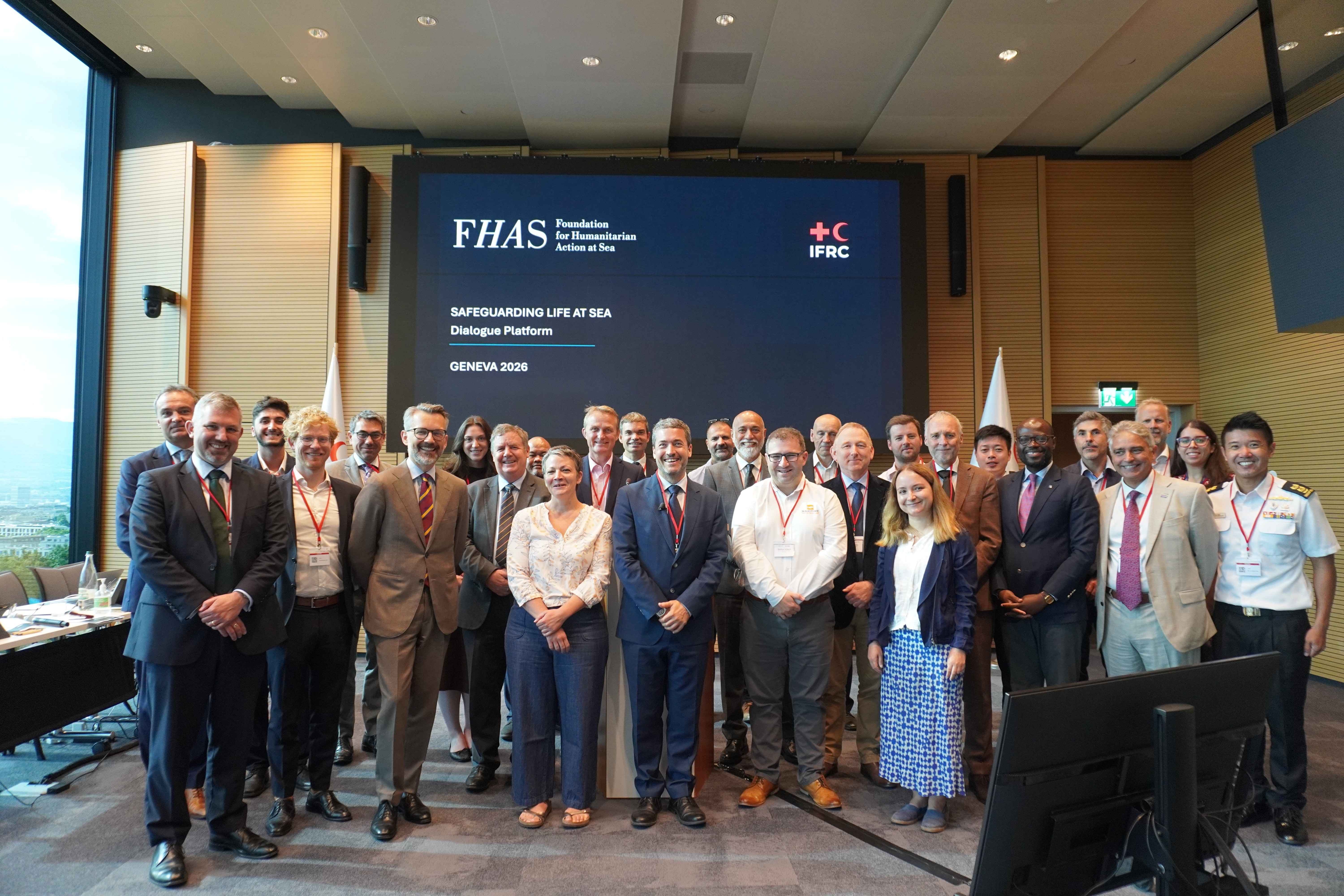
The Geneva Dialogue 2026 reflects the need to consolidate lessons from the 2024 Geneva Dialogue and subsequent regional platforms, to assess whether the priorities identified remain aligned with operational realities, and to ensure that FHAS remains connected to the actual needs of those responding at sea. The event provided an opportunity to report back on work undertaken to date, review what has changed, and redefine the focus for the next phase of engagement.
Three working groups outlined specific pathways forward. The first one focused on rescue governance, recommending regional gap analyses, pursuing SAR incorporation into regional agreements such as the Djibouti Code of Conduct, and collecting best practices on flag state roles. The second group emphasized training as vital for capacity-building, proposing SAR schools with courses tailored to maritime migrants and refugees. Lastly, the third group addressed fragmented data platforms, recognizing Maritime SAR Tools, IORIS, and Abyssal Foundation maps as complementary resources whose integration would improve ease of use and adoption.
FHAS will continue its approach of maintaining neutral, technical dialogue on SAR rescue issues, avoiding politicization while addressing ongoing confusion over key terms like 'distress' and 'place of safety.' SAR systems face rising demand and complexity amid uneven capabilities constrained by people, governance, funding, and information gaps.